Redesigning in the Hurricane

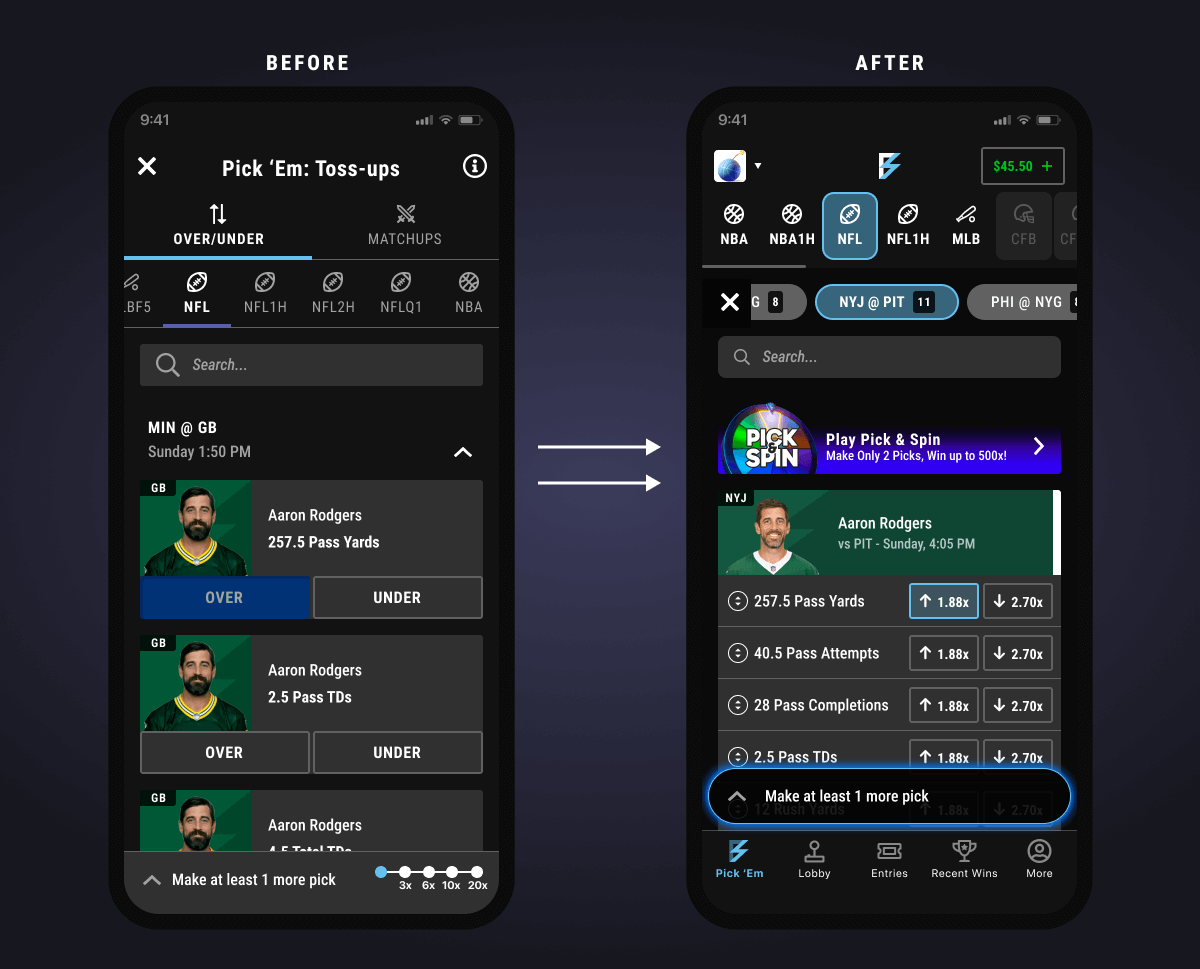
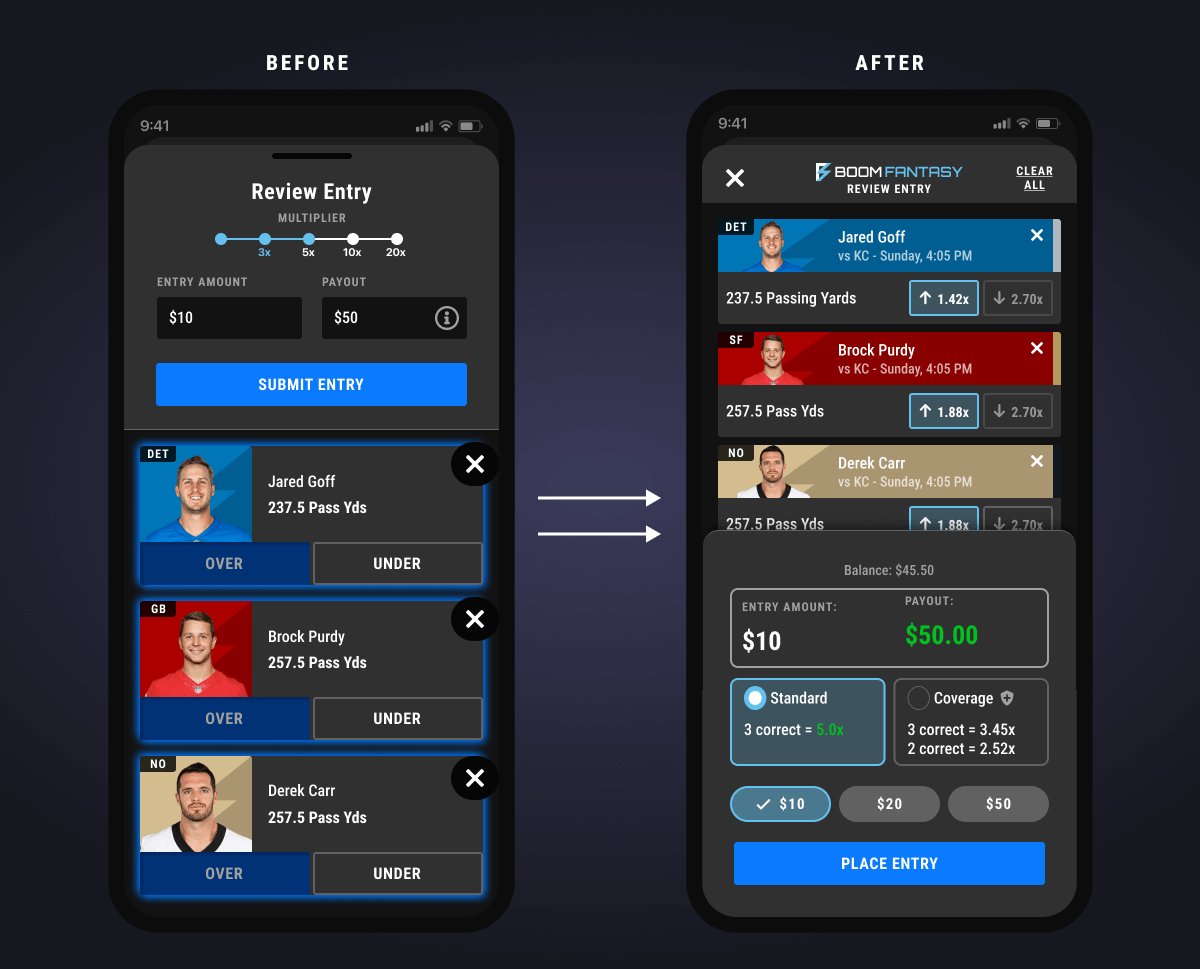
I executed the redesign of Pick 'Em 2.0 on Boom Fantasy, increasing player line options by 1,000% and delivering to engineers in just 1.5 sprints.
My Role

Product Vision

Design Execution

Research

Strategy

Stakeholder Alignment
Tools Used
Figma, Lottie, Jira, Confluence

Context

At Boom Fantasy, we pivoted to give users more flexibility in their picks and overhauled the experience. Leadership pushed to introduce “alternative lines” for players, expand options tenfold, and merge multiple odds-based modes into a single, unified game. My challenge was to deliver this upgraded experience while navigating significant constraints.

Timeline

1 ½ sprints (3 weeks) before engineering needed high-fidelity prototypes for handoff

Constraints

As developers wrapped up their last project, leadership prioritized this redesign, which displaced features already on the roadmap. With no time for formal research, I needed to quickly identify needs, validate assumptions, and design rapidly while ensuring the UI was efficient to implement.

High stakes: This direct engagement driver would make or break the gameplay, so mistakes = lost conversions.

Stakeholders: Multiple personas across different departments, each with varying opinions.

This was not a calm “research → ideate → prototype → validate” project. This was a sprint inside a hurricane.

The Hurricane Approach

1. Rapid Recon

With no time for a complete research plan, I took a scrappy approach:
Scanned competitors to see existing patterns and opportunities, then created breakdowns for analysis

Revisited insights from prior user testing sessions on the flow

Synced with our Support lead to uncover hidden user complaints and issues
After a couple of long days, I clearly understood the key challenges and the best direction forward.

2. Designing in Parallel with Discovery

Usually, you research → synthesize → design. I wasn't afforded that luxury here. I had to do this through ongoing communication with stakeholders and engineering to align the vision with technical execution. As I rapidly created high-fidelity comps, the PM simultaneously refined product requirements. Together, we mapped workflows, uncovered edge cases, and made design adjustments on the fly. There was no clean handoff or "phase change."

3. Managing the Tradeoffs

At first, it was simply too much. Gameplay data showed that one type of pick (only 3% of entries) took up disproportionate space and attention. We removed it to streamline the UI, resulting in zero user complaints and no impact on revenue.
When development timelines extended, the tough call to cut lower-impact features so we could focus on the core experience was made. We delivered on time without sacrificing quality by prioritizing what mattered most to users and the business.

What Got Shipped

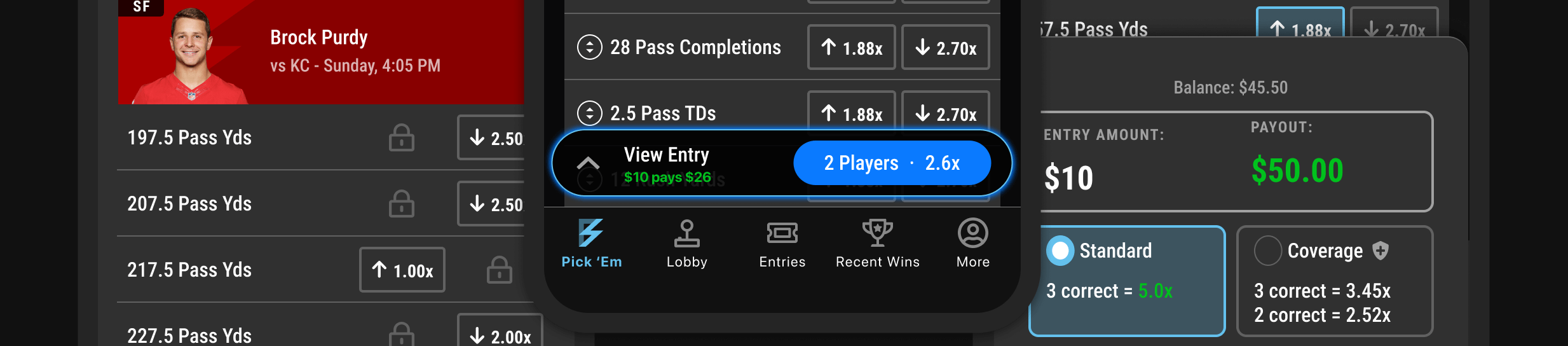
After several reviews and iterations, we aligned on a vision that satisfied all stakeholders. Our approach scaled better as we introduced the new gameplay format. The change expanded player choices by 10x, and the layout enabled us to display twelve (12) options at a glance compared to only four (4) in the previous card layout.

Impact & Learnings

The Pick ‘Em redesign had a meaningful impact across the product and aligned with a broader vision to expand our offerings and create a more delightful user experience. The long-term concepts I developed sparked valuable stakeholder discussions, helping shift the team toward a more user-centered approach. Along the way, I learned a few key lessons:

  • Stakeholder alignment is crucial:
    Large-scale workflow changes require clear communication and collaboration to secure leadership buy-in and cross-functional team alignment.
  • Balance short- and long-term goals:
    Delivering quick wins while keeping a broader vision in focus ensures lasting impact.
  • A great team is the dream:
    The pressure was high, but a sharp, reliable PM and dev team helped turn chaos into momentum.

Impact & Learnings

The Pick ‘Em redesign had a meaningful impact across the product and aligned with a broader vision to expand our offerings and create a more delightful user experience. My long-term concepts sparked valuable stakeholder discussions, helping shift the team toward a more user-centered approach. Along the way, I learned a few key lessons:

  • Stakeholder alignment is crucial:
    Large-scale workflow changes require clear communication and collaboration to secure leadership buy-in and cross-functional team alignment.
  • Balance short- and long-term goals:
    Delivering quick wins while keeping a broader vision in focus ensures lasting impact.
  • A great team is the dream:
    The pressure was high, but sharp, reliable colleagues helped turn chaos into momentum.

Summary

Under shifting priorities and high stakes in three weeks, I delivered a redesign that expanded player choice ten times, streamlined the user experience, and shipped on time without sacrificing quality. The process was not linear since research, design, and validation all happened in parallel. The outcome proved that clarity, focus, and ruthless prioritization can turn chaos into meaningful impact. This project improved a critical engagement driver and set a new standard for approaching product design under pressure.